
SPEED
QUALITY SUPPLIERS
EASY NAVIGATION
QUICK RESPONSES
DIRECT SHIPMENTS
GLOBAL SUPPORT
EXCELLENCE
QUALITY SUPPLIERS
PROMPT SERVICE
SATISFACTION IS
#1 PRIORITY
ECONOMICS
LOWEST PRICES
FREE FREIGHT
QUICK DELIVERIES
KNOWLEDGE
FACTORY TRAINED
OTJ EXPERIENCE
ENGINEERING SUPPORT
Hydra-Cell Pro® vs Diaphragm & Plunger High-Pressure Metering Pumps
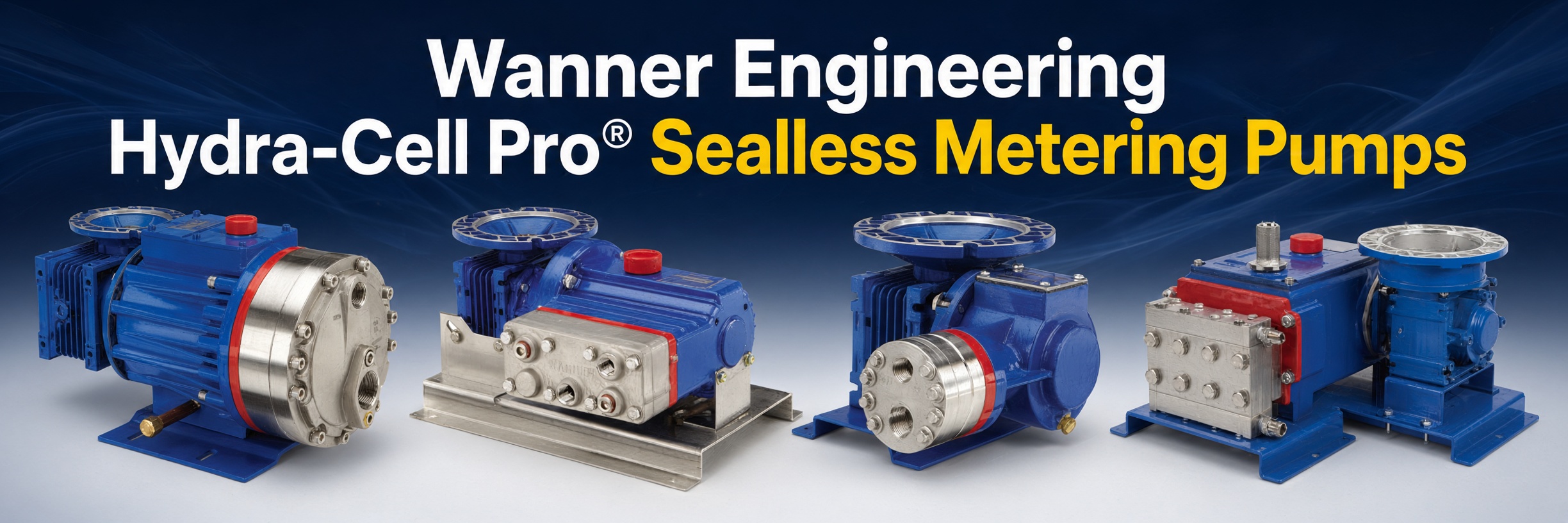

Low-flow, high-pressure metering typically involves controlled delivery of chemicals, catalysts, inhibitors, or additives in the range of approximately 0.1 to 80 GPH at discharge pressures of 1,000 to 3,500 PSIG. Fluid properties (corrosive, viscous, abrasive, non-lubricating, or particulate-laden) and variable suction conditions often determine the preferred pump architecture. In this duty range, Wanner Hydra-Cell Pro® metering pumps are frequently compared with hydraulic diaphragm and packed-plunger designs from Milton Roy, LEWA, Pulsafeeder, ProMinent, and Bran+Luebbe.
Call 908.362.9981 to speak with a sales engineer
or submit an inquiry.
Traditional Reciprocating Metering Pumps
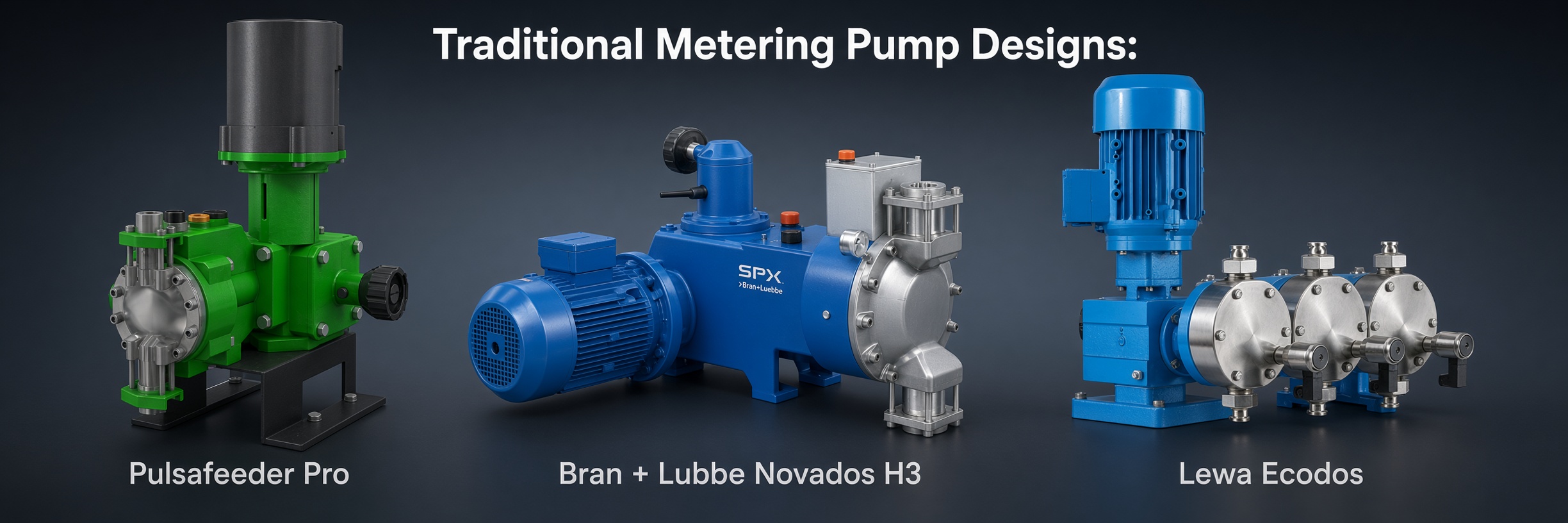
Milton Roy (mRoy, Milroyal, Primeroyal series), LEWA (ecoflow and process diaphragm ranges), Pulsafeeder (Pulsa, PulsaPro, Pulsar), ProMinent (Evolution, ProMus), and Bran+Luebbe (NOVADOS) primarily use single hydraulically actuated diaphragm or packed-plunger liquid ends. Capacity is adjusted by stroke length (manual or electric actuator) combined with motor speed. Multiplex configurations are available for higher flow or reduced pulsation. These pumps meet API 675 accuracy, linearity, and repeatability requirements.
Design characteristics include higher residual pulsation from single-chamber action (dampeners are common), limited dry-run tolerance, and greater sensitivity to solids or non-lubricating fluids due to tighter clearances and product-lubricated components. Packed-plunger versions require periodic packing adjustment or replacement. Extreme pressures beyond 5,000–10,000 psi or specialized multiplex arrangements remain strengths of certain traditional designs.
Innovative Architecture
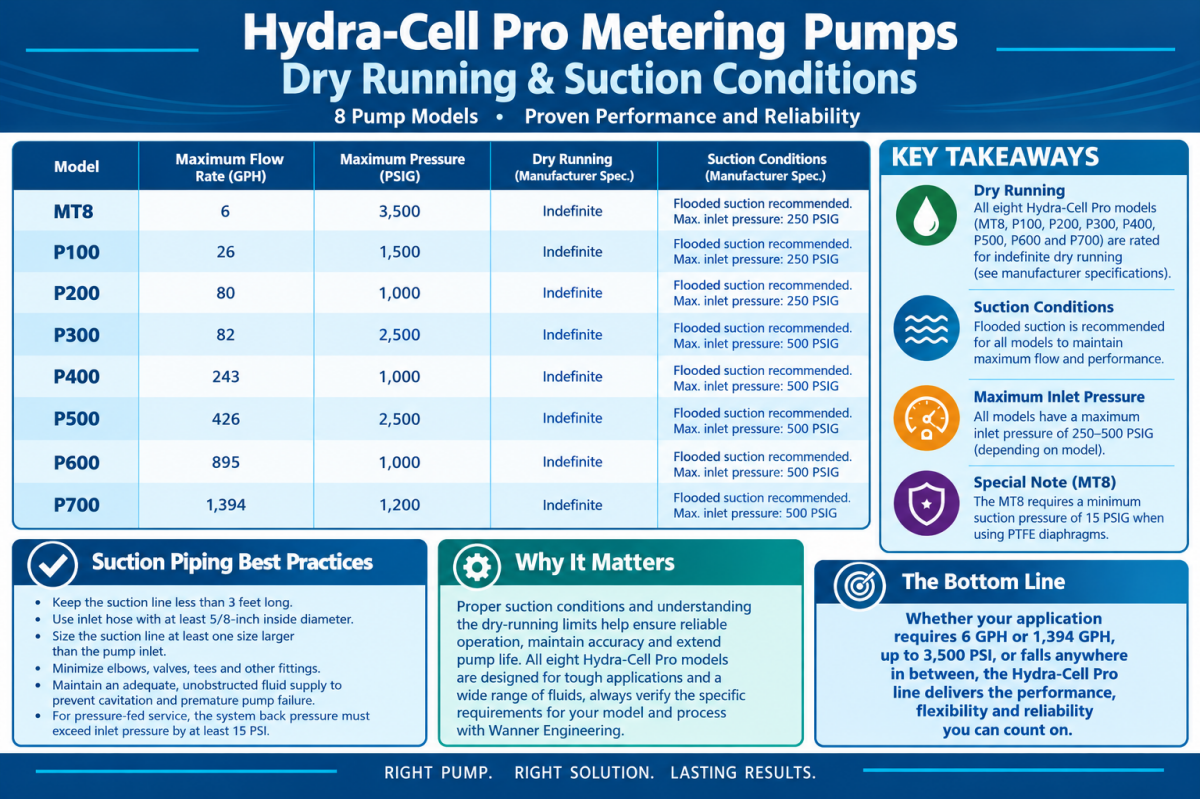
Wanner Hydra-Cell Pro® metering pumps (MT8 and P-series) use multiple hydraulically balanced diaphragms in a single liquid end with no process-side packing or dynamic seals. Flow is controlled by pump speed via VFD. Patented Advanced Diaphragm Position Control (ADPC) allows indefinite dry running and protects the diaphragms under restricted suction. Multi-diaphragm sequencing (triplex on MT8, P200, and P300; simplex on P100) produces lower residual pulsation than a comparable single-chamber pump. Check valves are the primary wear items and are field-replaceable. The design handles non-lubricating, abrasive, and particulate-laden fluids more readily than traditional reciprocating pumps.
Overlap and Practical Differences
Plunger, piston, mechanically actuated diaphragm and hydraulically actuated diaphragm pumps overlap flow and pressure capabilities of the sealless Hydra-Cell Pro design. Differences appear under less-than-ideal conditions:
- Pulsation: Multi-diaphragm Hydra-Cell Pro models (all but the P100 model) generate lower residual pulsation due to their sequential stroke design. The inherently pulse-free flow means dampeners are often unnecessary. Traditional single-diaphragm or plunger pumps more frequently require them. The simplex P100 produces higher pulsation frequency at elevated speed compared to other single-diaphragm and plunger pumps. Designs from LEWA and Bran + Luebbe can mechanically couple multiple pump chambers together although each has its own gearbox (very expensive).
- Dry running and suction: Hydra-Cell Pro pumps can run dry indefinitely and tolerate a restricted inlet. Traditional designs are limited in this regard.
- Solids & non-lubricating fluids: Hydra-Cell Pro’s check-valve design and isolation of sliding parts improve tolerances. Traditional pumps are more sensitive to abrasives and non-lubricating liquids.
- Control: Hydra-Cell Pro uses speed control only. Traditional pumps combine stroke-length adjustment with speed. Both can achieve high turndown; the electronic approach eliminates a mechanical linkage.
- Maintenance and cost: Initial acquisition cost in the overlap range is often comparable once actuators and dampeners are considered. Hydra-Cell Pro’s seal-less design and reduced auxiliary equipment can lower lifecycle cost through simpler maintenance (primarily check valves) and sustained efficiency.
Application Guidance
Hydra-Cell Pro is typically evaluated when residual pulsation must be minimized, suction conditions are variable, the fluid contains solids or is non-lubricating, or lower maintenance is a priority within the 0.1–80 GPH / 1,000–3,500 PSI window. Traditional hydraulic diaphragm and packed-plunger pumps remain appropriate for clean, stable duties, plant standardization, extreme pressures outside Hydra-Cell Pro’s current metering envelope, or multiplex arrangements.
Selection requires the actual duty point (flow at pressure), fluid properties, suction conditions, control requirements, and total installed cost. Within the overlapping range, neither architecture is automatically preferred; the better choice is the pump that meets the verified operating conditions with suitable materials, acceptable system behavior, and justified lifecycle cost.
Call 908.362.9981
or submit an inquiry form for same-day assistance.
Documented Application Examples
TiO2 Metering
In one chemical-manufacturing case, two Hydra-Cell pumps replaced a single-piston Lewa pump (and outperformed a considered 3-piston Lewa alternative) for metering 30% titanium dioxide into a Lactam line. Advantages included 25% lower purchase cost, lower energy use, smaller footprint, lower pulsation, accurate linear speed-to-flow control via VFD, and reliable abrasive handling with minimal maintenance after a year of 16-hour daily operation.
Polyurethane Foam Manufacturing
Other studies show Hydra-Cell preferred over traditional API 675 metering pumps and piston pumps for catalyst/blowing-agent metering (lower cost, smoother flow, no pulsation dampeners needed).
Fluidized Catalytic Cracking
Chosen over conventional metering pumps in bead-catalyst production for consistent spherical-bead quality without pulsation issues.
Similar replacements or direct comparisons to plunger/piston and conventional metering pumps appear in multiple application studies (e.g., dosing celite, adhesive metering, water-treatment chemical metering). These highlight sealless design benefits for abrasives, dry-run tolerance, and reduced maintenance versus packed-plunger or hydraulically balanced diaphragm designs from brands like Lewa.
Tap into our 35 years of experience helping customers solve tough pumping applications by increasing reliability and reducing costs. Call and speak to a factory trained associate, email project design criteria and pictures, and leverage AI agent capabilities to quickly answer questions about products and applications.
Related Resources
Hydra-Cell Pro Metering Pumps
Technical Articles
Give the Fluid Alchemist® a pump model or part number and it can confirm kit and component part numbers, provide detailed specifications, and walk you through troubleshooting, installation, and maintenance.
Try Fluid Alchemist® (chat bubble, bottom left)