
SPEED
QUALITY SUPPLIERS
EASY NAVIGATION
QUICK RESPONSES
DIRECT SHIPMENTS
GLOBAL SUPPORT
EXCELLENCE
QUALITY SUPPLIERS
PROMPT SERVICE
SATISFACTION IS
#1 PRIORITY
ECONOMICS
LOWEST PRICES
FREE FREIGHT
QUICK DELIVERIES
KNOWLEDGE
FACTORY TRAINED
OTJ EXPERIENCE
ENGINEERING SUPPORT
Wanner Hydra-Cell Pro® Pump Repair Kits Explained
Wanner Hydra-Cell Pro® pumps last because they have no dynamic seal. Seals and packing leak and shuts a line down. Wanner Hydra-Cell Pro® pumps only maintenance includes oil changes and fluid end kits (the parts that see process liquid).
There are not many of those parts, and you do not need a special bench or factory training. If you can reach the cap screws around the head, you can change them in place.
Diaphragm Kit (D)
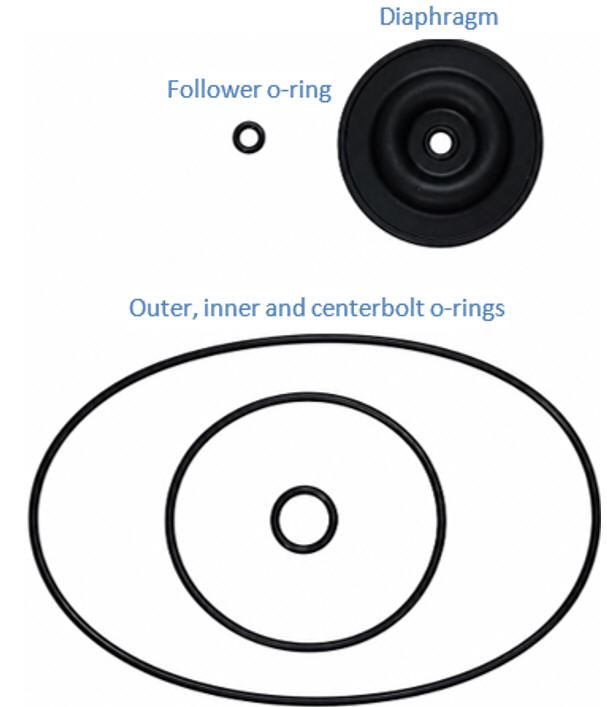
A standard diaphragm kit includes:
- Diaphragms
- Follower O-rings (screw retainers on some models)
- Manifold O-rings (outer, inner, and center-bolt on some models)
- Loctite 242
Valve Kit (V)
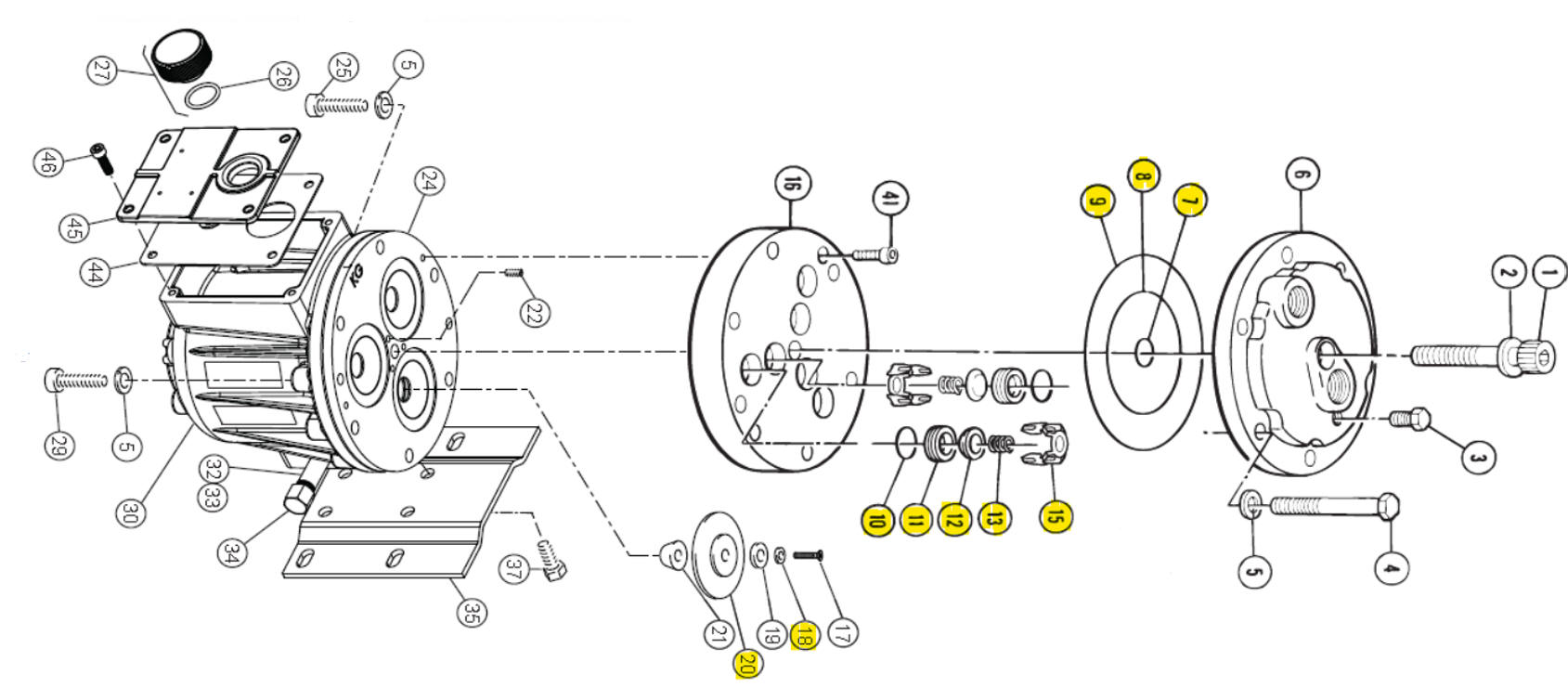
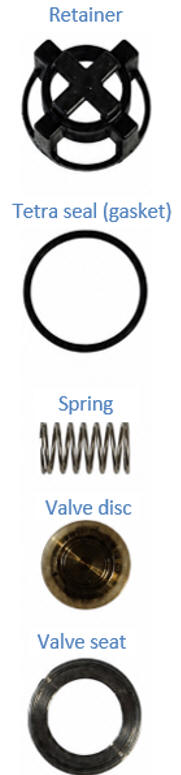
A valve kit rebuilds the check-valve stacks:
- Manifold O-rings (outer, inner, center-bolt)
- Check-valve O-rings
- Valve seats
- Valve discs
- Valve springs
- Tetra seals
- Dampening washers (when the model uses them)
Complete Kit (K)
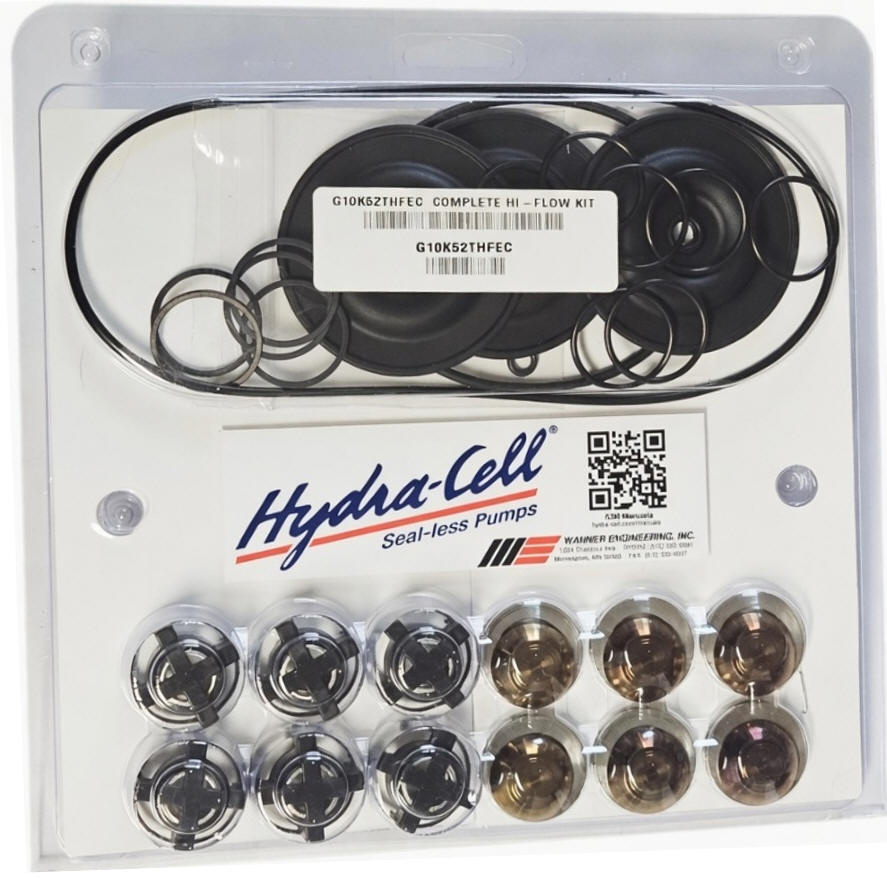
A complete kit is the diaphragm kit plus the valve kit. How many diaphragms and valve stacks you get depends on how many chambers that model has.
Which Kit?
The wear parts are usually the disc and seat. They meet up to 29 times a second. As the face wears, seal efficiency falls and you see it as a swinging gauge or short flow.
Valve wear is contact driven followed by chemistry and abrasive velocity across the valve/seat interface. That is why discs and seats come in stainless, Hastelloy, tungsten carbide and ceramic. The rest of the stack has the same material choices. On clean, non-aggressive liquid, valves often last 8,000 hours or more.
Leave chemistry out of it and diaphragms and O-rings are not wear parts. Still, complete kits are what most customers buy because the pump head is opened and the additional cost is minimal.
Weights and Dimensions
| Pump Series | Complete Kit Dimensions (in) | Kit Weight (lbs) |
|---|---|---|
| 20 | 9 x 9 x 2 | 0.5 |
| 3 | 9 x 9 x 2 | 0.5 |
| 10 / 12 | 9 x 9 x 2 | 0.5 |
| 15 / 17 | 11 x 8 x 2 | 1.0 |
| 25 | 11 x 8 x 2 | 1.0 |
| 35 | 12 x 12 x 2 | 1.5 |
| 40 | 12 x 12 x 2 | 1.5 |
| 66 | 12 x 12 x 2 | 2.0 |
Individual Components
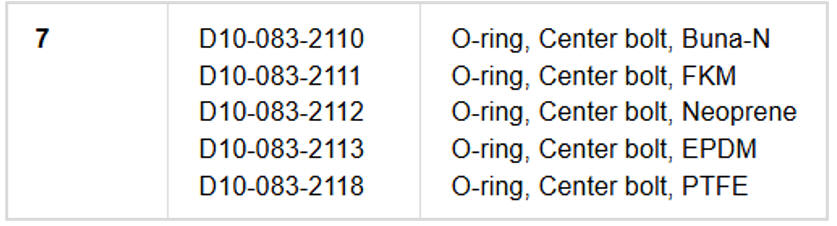
You can buy individual components from the PDF file or the online parts list. The D10 model for center bolt o-rings looks like this, with every material option shown:
The kit always costs less than purchasing individual components.
Tool Kits
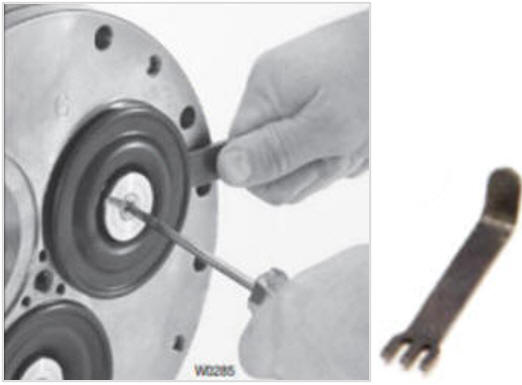
You can maintain the Wanner Hydra-Cell Pro pumps with common tools. If you have several pumps, two specialty tools earn their keep: the puller/lever and the valve plunger holder.
Puller / lever — lifts outlet seats straight out. Without it you tap them from the chamber side with a screwdriver and a hammer. The tool keeps the seat from cocking in the plate.
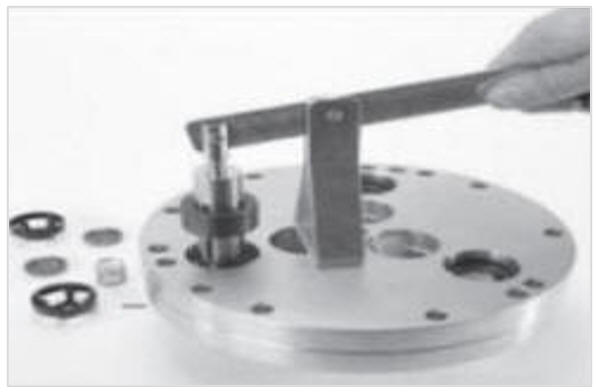
Valve plunger holder — holds the short plunger shaft so you can take out the diaphragm screw. Without it you pin the cross-hole with a small Allen wrench, which often bends.
or complete the inquiry form
Kit numbers and list prices: repair kit calculator